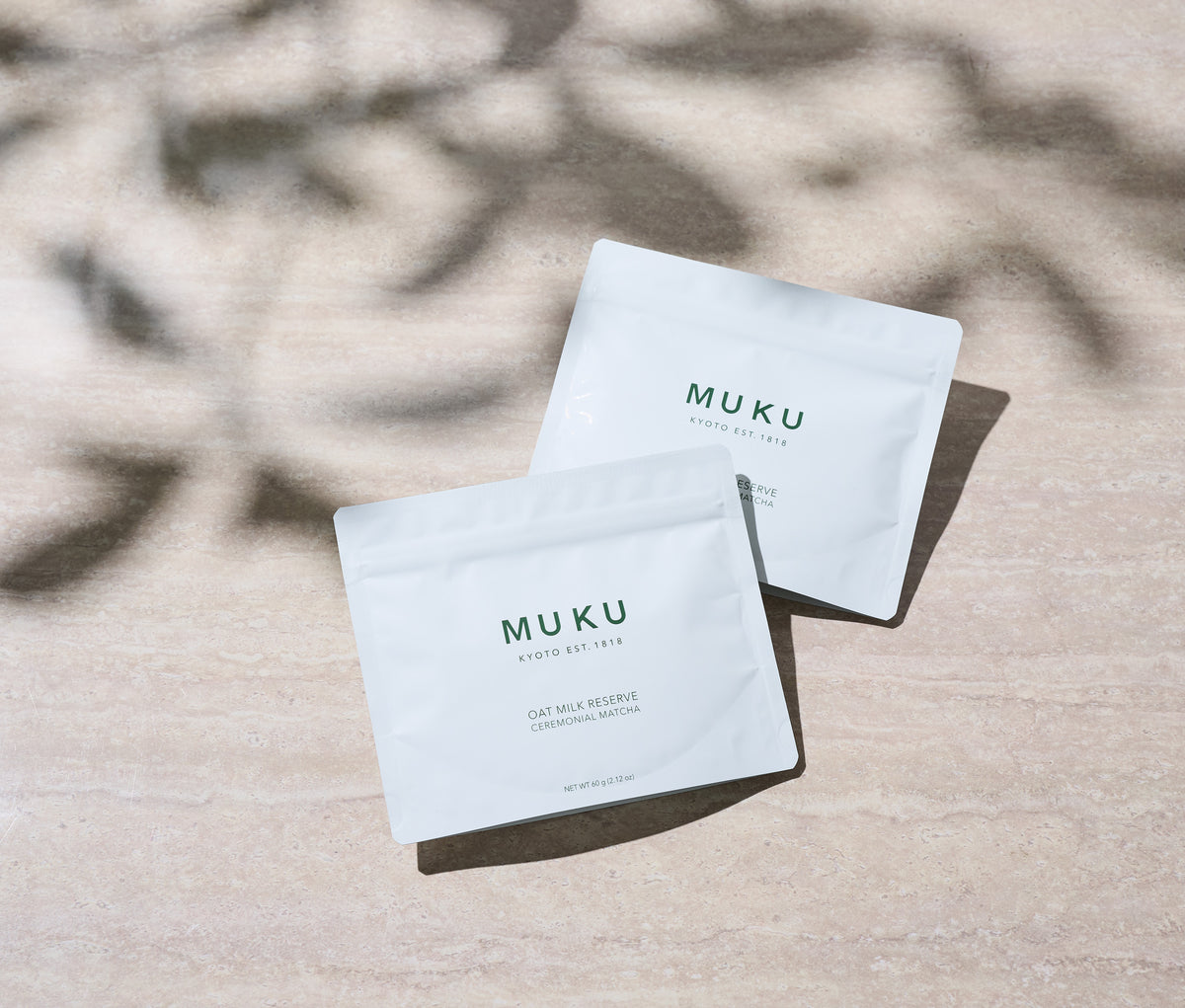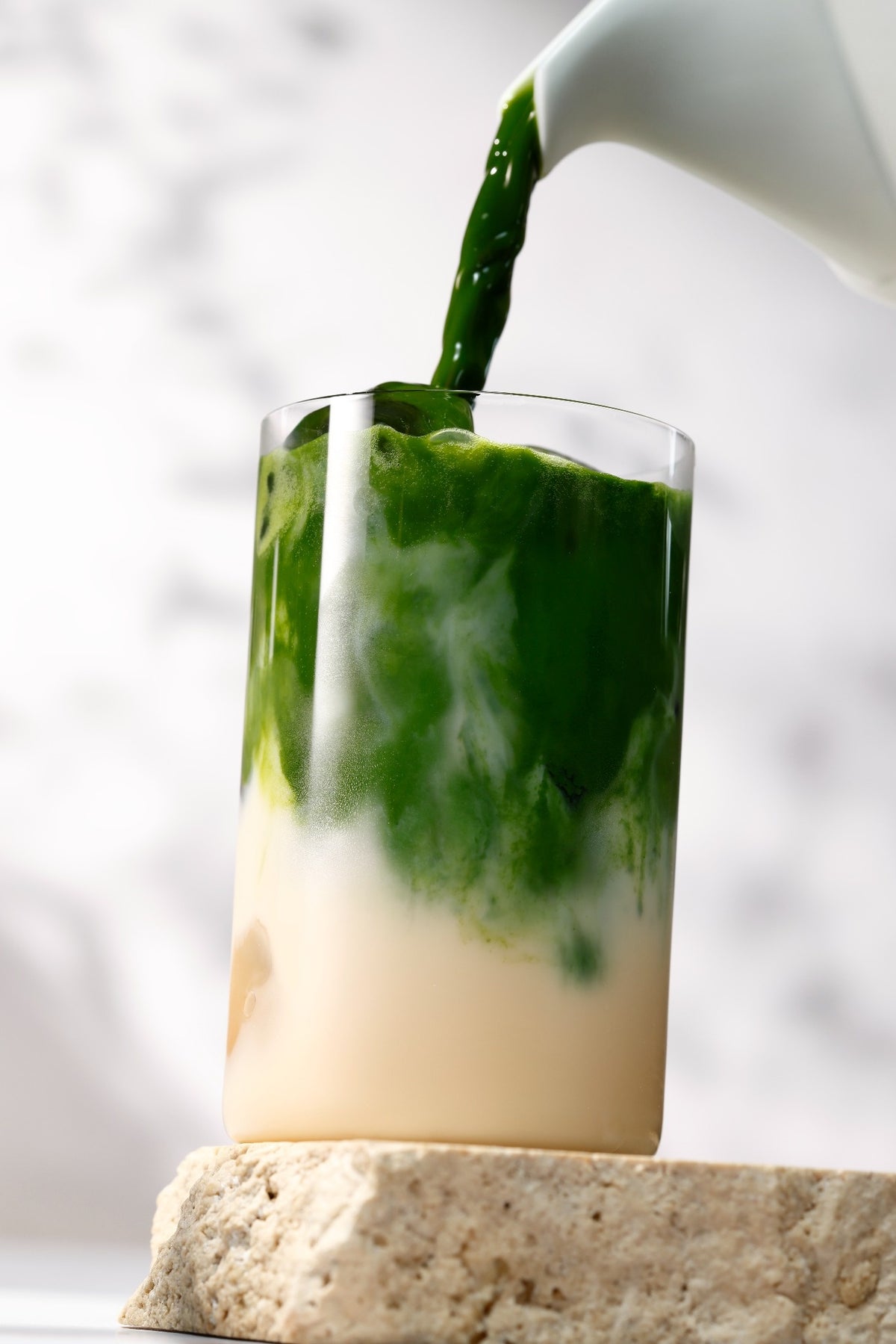
One morning in Los Angeles, we ordered a matcha latte.
It was a beautiful green. One sip, and we knew — this was not the matcha we know from Kyoto.
It was either bitter, or simply gone — vanished into the milk. None of matcha's natural sweetness or aroma ever reached the cup.
The reason was clear: America drinks most of its matcha in lattes — yet a matcha designed for oat milk didn't exist. Anywhere.
Matcha has regions. Cultivars. Steaming, firing, blending.
And when the milk changes, the right matcha changes completely.
Still, nobody was designing matcha for each milk — oat milk, whole milk, each with a blend of its own.
We had two things to work with:
two hundred years of Kyoto tea judgment, honed since 1818,
and the craft of Keisuke Hori — The Tenth-Dan Tea Master, who won Japan's national tea-masters' championship.
We poured all of it into a single cup: the oat milk latte.
Adjust the blend. Whisk. Measure. Taste. Again and again — until we finally arrived at this cup.
Then we tested it in Los Angeles — twice, cup against cup, with a hundred matcha-latte lovers.
The blend they chose became MUKU.
No sugar needed. Because there's nothing to hide.
Matcha made only for oat milk. That is MUKU — 無垢. Pure.
The Proof
Chosen by people. Measured by science.
Every MUKU blend is proven twice. First, people: twice in Los Angeles, 100 matcha-latte lovers blind-tasted our blends — the one they chose became MUKU. Then, science: at MUKU Lab, our research lab in Kyoto, we analyze what's inside every blend we make. Of the 17 ceremonial matchas we tested in the US, MUKU measured the highest L-theanine — the amino acid behind matcha's natural sweetness — about 1.5× the average. The sweetness you taste isn't flavoring. It's measurable. That's why no sugar is needed.
100 tasters in LA
Blind-tasted by 100 matcha-latte lovers in LA. The blend they chose became MUKU.
1.5× L-theanine
At MUKU Lab, we tested 17 ceremonial matchas sold in the US. MUKU measured the highest L-theanine of them all — about 1.5× the average. L-theanine is the amino acid behind matcha's natural sweetness and umami.
Inside MUKU Lab
MUKU Lab is our research lab in Kyoto, inside our tea house. We study one question: how matcha behaves in milk — oat milk, whole milk, each one different. Two instruments do the work: the palate of Keisuke Hori, The Tenth-Dan Tea Master, and our own component analysis — we measure what's inside every blend we make, from L-theanine, the amino acid behind matcha's natural sweetness, on down. People and science, side by side. Oat Milk Reserve was born here.

A word from the tea master
Keisuke Hori — The Tenth-Dan Tea Master, champion of Japan's National Tea Appraisal Competition.
Our tea master is in-house. Every MUKU blend passes through the eyes and palate of Keisuke Hori, Japan's #1 Grand Tea Master, before it leaves Kyoto.
Matcha shows its true character the moment it meets milk — that is what I wanted people to taste, and it guided every blend we tested.
A matcha latte is a drink where the matcha leans into the sweetness and body of the milk. That is exactly why a matcha that disappears into the milk misses the point. From the first sip, the matcha should rise clearly through the milk — and after the last, leave a gentle, lingering finish. That is what a matcha made for lattes must do.
A higher grade of matcha does not, by itself, make a better latte. The grade of the leaf and the taste of the latte are two different things. Matcha changes once it meets milk — so MUKU is designed to be at its best not in the tea bowl, but in the latte. And the right matcha changes with the milk: oat milk, whole milk — each calls for its own blend. Oat Milk Reserve is made to be at its best in one cup: the oat milk latte.
This blend is built around a tea leaf with real character — rich in flavor, deep in aroma — in a composition that draws the most out of it, for one drink: the matcha latte. A firm first impression on the palate. A full-bodied backbone that stands up to the milk's sweetness. A quiet roasted note that folds into the milk and creates real depth. That deep aroma pairs beautifully with the grain notes of oat milk.
The flavor is strong enough that the cup satisfies without any added sugar. If this one cup lets you taste what matcha truly is, nothing would make me happier.
— Keisuke Hori, The Tenth-Dan Tea Master
The tenth dan is the highest rank in Japanese tea appraisal. Since the national competition was founded in 1956, only 30 tea masters have ever reached it (as of March 2026).

The Company Behind MUKU
Not a brand that buys from Kyoto. A Kyoto tea house, in its own name.
Behind MUKU is Kyoto Chanokura — a Kyoto tea house that has done one thing since 1818: Uji tea. It created Japan's first green tea bag (1962). Its matcha is the choice of Kikunoi — the Kyoto culinary house that has held three Michelin stars for 17 straight years — and a tea the two houses created together was served to world leaders at the G7 Hiroshima Summit. Two hundred years of doing one thing — poured into your latte.
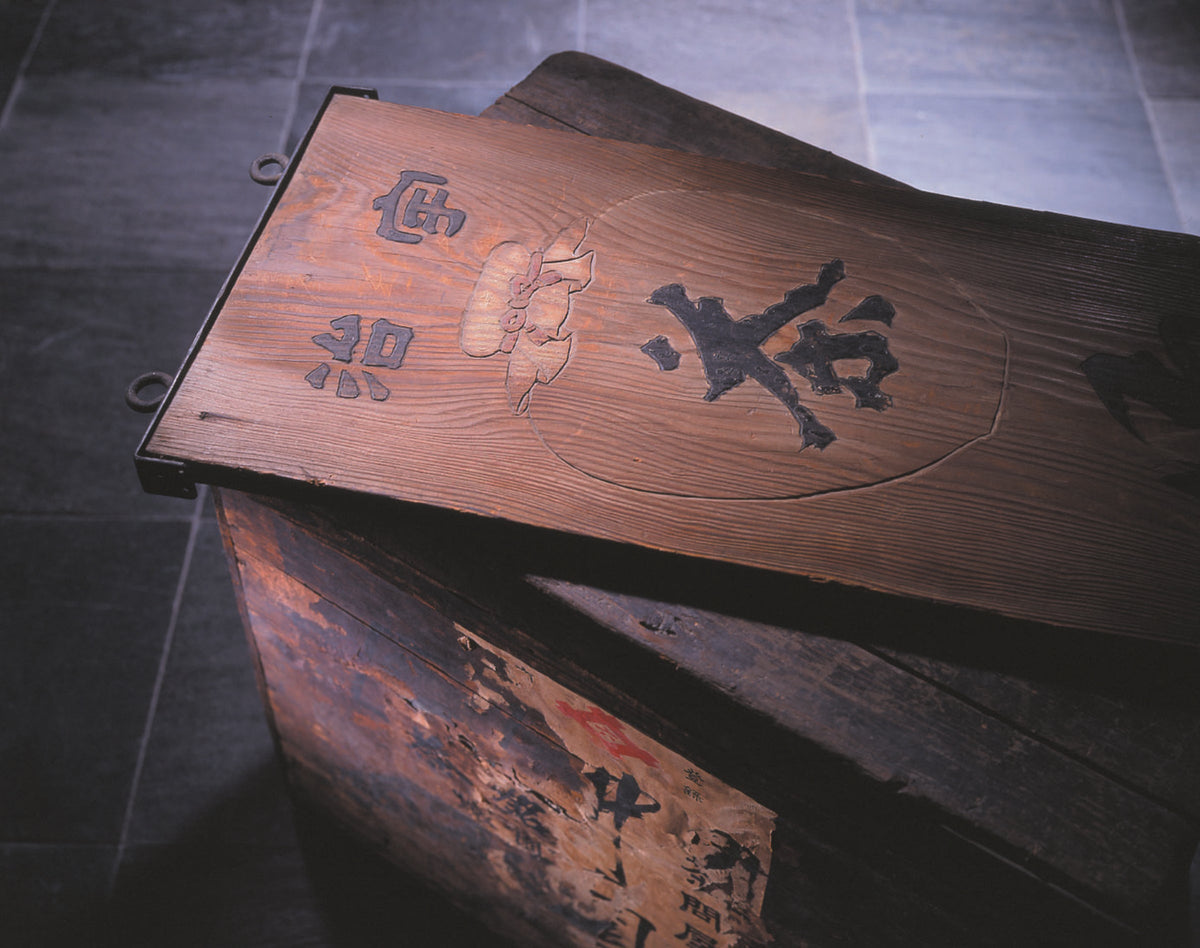
The name
MUKU comes from the Japanese word 無垢 — muku.
Muku describes purity: something unmixed, untouched, with nothing added that doesn't belong. It speaks of a mind free of impurity — and in Japanese craft, muku-zai is solid, untreated wood: material left exactly as it is, because it needs nothing more.
For us, muku is the latte itself. We want you to drink it pure — nothing but matcha and milk. No sugar, no syrup, no flavoring. When nothing in the cup is masking it, matcha's natural sweetness and aroma come through exactly as they are. To make that possible, we designed the matcha itself for the milk it meets — one blend, made for one purpose: the oat milk latte.
A latte kept pure, beautiful as it is. That is the meaning we placed in the name.